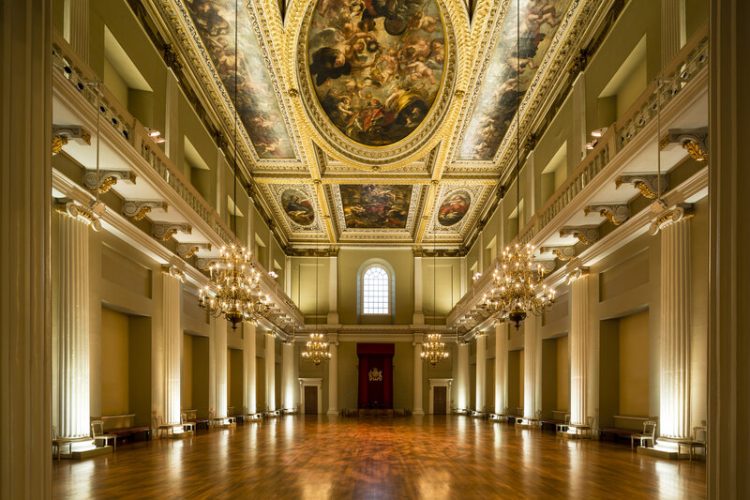
We were honoured to provide the Historical Banqueting House with a Buffer Vessel – the perfect solution to meet their Hot Water requirements.
The remarkable Banqueting House situated in Whitehall, London which dates back to the 1600’s were in need of a replacement hot water cylinder and was specified one of our very own tanks. A building of this stature required a quality tank and that is exactly what we provided them with.
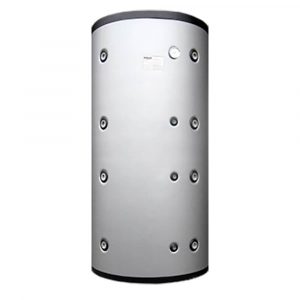
The chosen tank was a 900 Litre Horizontal Mild Steel Buffer Vessel, it comprised of four DN65 flanged connections, baffles and was 100mm insulated.
A buffer vessel, or accumulator tank as they are sometimes referred to, tend to be used in conjunction with renewable energy installations and in particular solid fuel and bio mass systems, where the heat is dumped and stored in the buffer vessel then used throughout the rest of the day.
This cuts down on the length of time the boiler is on and therefore reduces the associated boiler or heat pump cycling – which is when the boiler fires up and down to top up heat too regularly. A buffer tank contains a volume of water which increases the overall volume of the heating distribution system.
 Boiler cycling is a key concern as it not only reduces operation life of heating equipment, increases breakdowns and the need for servicing but also increases fuel consumption and CO2 emissions.
The Banqueting House is the grandest and best-known survivor of the architectural genre of banqueting houses, constructed for elaborate entertaining. It is the only large surviving component of the Palace of Whitehall, the residence of English monarchs from 1530 to 1698. The building is important in the history of English architecture as the first structure to be completed in the classical style of Palladian architecture which was to transform English architecture.
Begun in 1619 and designed by Inigo Jones in a style influenced by Andrea Palladio, the Banqueting House was completed in 1622, twenty seven years before King Charles I of England was beheaded on a scaffold in front of it. The building was controversially re-faced in the 19th century, though the details of the original façade were faithfully preserved.
Today, the Banqueting House is a national monument, open to the public and preserved as a Grade I listed building which is cared for by an independent charity.